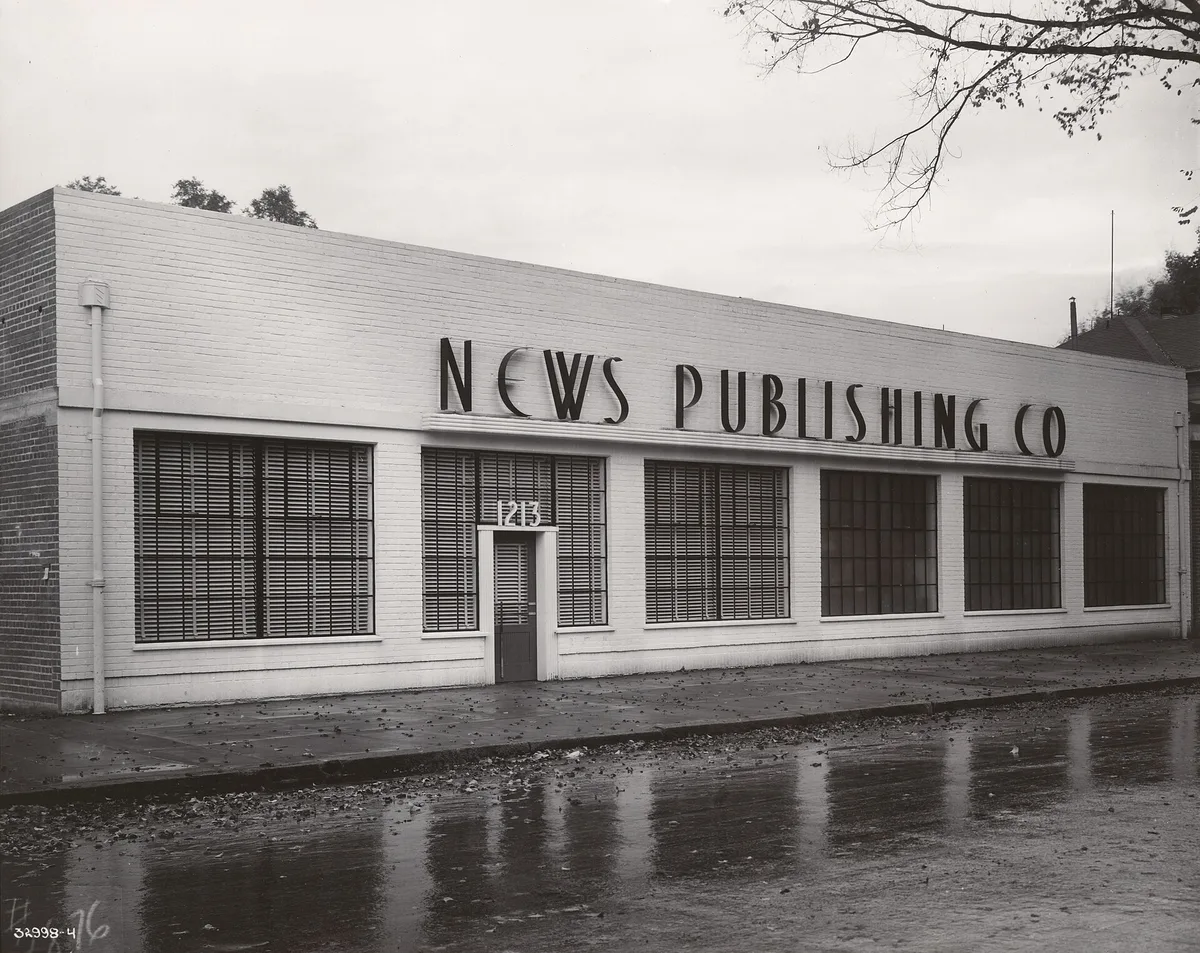
MediaNews Group is one of the largest newspaper chains in the United States: a holding company that owns or operates dozens of local daily and weekly titles, mostly clustered in California, Colorado, Texas and a handful of other markets. When a chain owns a paper, the local masthead keeps its name. The economics, staffing decisions and often the printing plant sit several layers up, at the parent.
That structure is the whole story of the chain newspaper business. A group publisher can share costs that a standalone paper cannot: one design desk, one payroll system, one ad-sales platform, a shared statehouse bureau. The trade-off is that the people making budget calls are rarely the people who live in the towns the paper covers. Understanding how that arrangement works explains a lot about why local coverage looks the way it does.
It helps to start with what the industry itself means by media. As Understand Media puts it, media is a broad range of communication channels that transmit information to a large audience, spanning print, broadcast and digital forms. A newspaper chain sits in the print-and-digital slice of that definition, and it is defined less by the channel than by the ownership model: many titles, one corporate parent.
What does MediaNews Group actually own?
MediaNews Group, sometimes operating under the Digital First Media banner, runs a portfolio of local news brands. The exact roster shifts: titles get sold, merged with a neighbor, or rebranded into a regional group. Readers in a chain market often notice this as a shared look across supposedly separate papers, or identical syndicated features appearing in two towns an hour apart.
The practical point for a reader is that the masthead on the front page is not the same thing as the owner. A paper called the local gazette can be an independent family business, part of a small regional group, or one node in a national chain. The masthead tells you who edits the paper. The corporate structure tells you who decides how many reporters it can afford.
Why did newspapers end up in chains?
Chains are old. For most of the twentieth century, buying a profitable local daily was a reliable business, and companies built by acquiring papers grew large on the strength of print advertising. Classified ads, retail display ads and legal notices gave papers a revenue base that did not depend on newsstand sales.
That base eroded when advertising moved online, where it is cheaper and easier to measure. The papers that remained profitable did so with thinner staffs and higher prices. Chains, which could spread central costs across many titles, were often better positioned to survive that squeeze than a single-town independent. Consolidation was not a strategy so much as an outcome: weaker papers sold, stronger operators bought, and the industry concentrated.
We've seen this pattern across the wider media business, not just newspapers. The same deal logic shows up in broadcast, in magazines and in digital publishers, which is why it is worth reading consolidation as a system rather than a one-off. Our analysis of why media consolidation accelerated in 2025 covers the recent wave in detail: why media consolidation accelerated in 2025 — and what the deal logic actually was. This connects to our earlier piece, Why media consolidation accelerated in 2025 — and what the deal logic actually was.
How does a chain actually run a local paper?
The mechanics matter more than the org chart. In a typical chain arrangement, the local paper keeps an editor and a reporting staff, while functions that benefit from scale move to the center. Those usually include:
- Page design and layout, done by a shared production desk serving many titles
- Printing and distribution, often through a regional plant rather than a press in the paper's own building
- Advertising systems, programmatic ad sales and billing
- Payroll, HR, legal and benefits
- Subscription pricing, paywall configuration and customer service
A regional editor or group publisher sits above the local editor and carries the budget targets. Local editors still decide what to cover, but they decide it inside a staffing number set elsewhere. That is the honest version of "editorial independence" under a chain: real, but bounded.
What consolidation means for local coverage
The effects cut both ways, and they are measurable without any single dramatic villain.
On the cost side, shared production and centralized sales can keep a paper alive that would otherwise close. A town with a chain-owned paper printing four days a week generally has more local reporting than the same town with no paper at all. The counterfactual matters: the alternative to a consolidated local paper is frequently not a livelier independent one. It is nothing.
On the coverage side, the risks are familiar to anyone who has watched a newsroom shrink. Fewer reporters means less city-hall accountability work, which is the slow, unglamorous stuff that does not trend. Wire and syndicated content fills pages that local reporting once did. Coverage of neighboring towns in the same chain can start to look alike, because the same small team produces several of them.
Researchers track the endpoint of this process as news deserts, communities with no local news outlet at all. The cumulative count of closures over two decades is the soberest way to see what consolidation and collapse have done together: the latest news-desert counts: what two decades of newsroom closures add up to. Readers following this should also see The latest news-desert counts: what two decades of newsroom closures add up to.
What this means for readers and operators
For readers, the useful skill is checking who owns the paper you read. Ownership tells you where the budget pressure comes from, which syndicated content to expect, and whether a story about the local school board came from a reporter who attended the meeting or a one-paragraph roundup produced three states away. It does not tell you the story is wrong. It tells you what the reporting conditions were.
For operators and publishers watching the model, the lesson is not "chains bad, independents good." The lesson is that scale buys survival and costs focus. A chain can afford a printing plant, a paywall team and a legal department. It struggles to afford a reporter in every town it claims to cover. An independent can afford the reporter but not the plant. Neither structure escapes the underlying problem: local news has lost most of the advertising revenue that used to fund it, and reader revenue has to replace it at a fraction of the old margin.
That is also why the interesting experiments in local news right now tend to be structural: nonprofits, public funding, ownership transfers to trusts or reader cooperatives. Each tries to change who the paper answers to, on the theory that the ownership layer ultimately shapes the coverage. Whether those models scale to the number of communities that need them is the open question the chain era left behind.
The trade-offs, stated plainly
Consolidation in the newspaper business is a bargain: corporate scale in exchange for local autonomy. MediaNews Group and its peers bought struggling papers that would otherwise have closed, kept mastheads alive that markets alone would not have supported, and accepted thinner newsrooms as the price. Readers got continuity and, in many towns, the only professional coverage they have. What they gave up is harder to see from the outside: the depth of a newsroom sized to its city rather than to a corporate margin target.
Neither side of that trade is going away. The honest question for any community is not whether its paper is chain-owned, but whether it is still doing the work that justifies the masthead. That is a question worth asking of every outlet, chain or not.