Publishing industry statistics: what the numbers can and cannot tell you
Most headline figures about book publishing come from interested parties. Here is how to read them.
Gabriela Montoya · November 22, 2026Most headline figures about book publishing come from interested parties. Here is how to read them.
Gabriela Montoya · November 22, 2026Goldman Sachs Research sized the creator economy at $250 billion in 2023. How the middle class of creators earns steadily without fame, per published platform numbers.
Michael Hayes · November 18, 2026
The Allen Media Group division's direct-from-filmmaker VOD acquisition is the quiet workhorse of indie film distribution.
Amara Okonkwo · November 14, 2026
The roles are shifting from print desks to digital, data and audience work — and the map looks different depending on where you stand.
Colin Reyes · November 10, 2026
Editorial buys and shapes books, sales moves them, rights licenses them again — the career tracks of publishing, compared with the 2025 pay data.
Amara Okonkwo · October 31, 2026
Most independent bookstores run on net operating margins of 0% to 4%. Curation, events, and sidelines — not book sales — keep the doors open.
Colin Reyes · October 28, 2026Publishing a children's book usually means agent first, publisher second. The routes, the formats, the costs, and what Wonderbly's 8-million-book run proves.
Tanya Brooks · October 22, 2026Agents read in waves. Writers who spend autumn on the query, the comps and the opening pages arrive in better shape than the ones who start in December.
Gabriela Montoya · October 9, 2026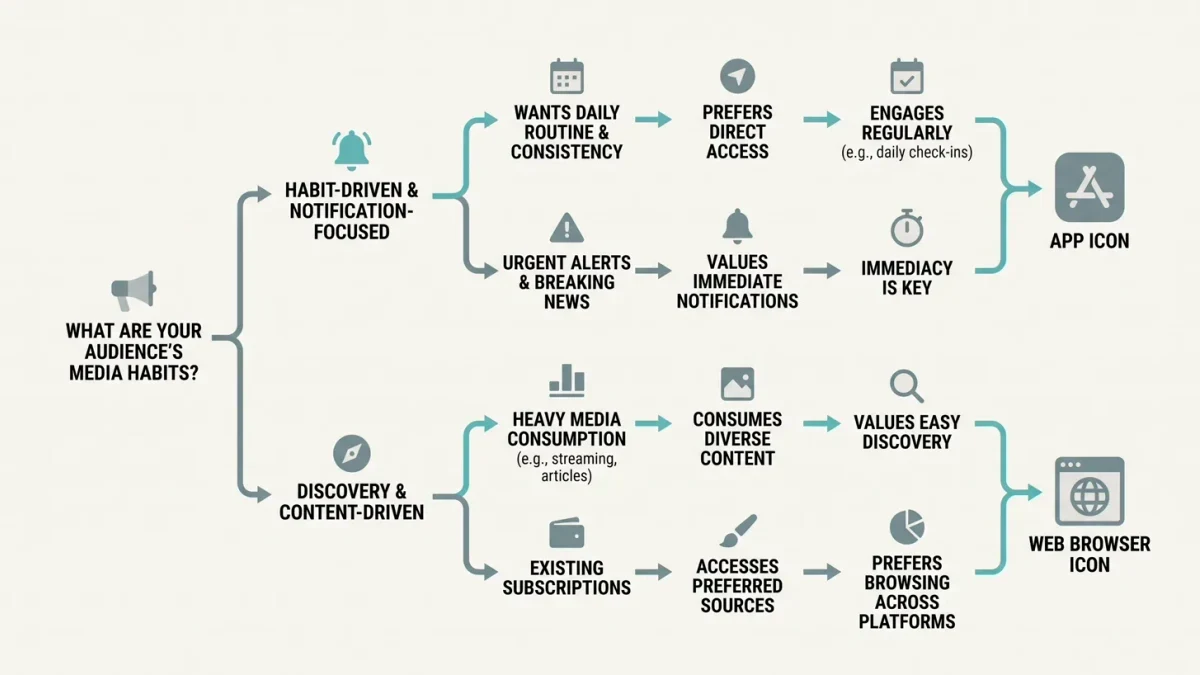
Most publishers do not need a native app; a small set with specific audience behaviors does — and the difference is a checklist, not a budget.
Amara Okonkwo · June 12, 2026
Search referrals are shrinking as AI answers absorb clicks. Piano's benchmark puts search traffic down 36% while revenue fell 16%: the gap is what direct readers are worth.
Tanya Brooks · November 6, 2026
A plain-language guide to licensing, platform terms of service, and the digital rights writers and artists keep — or hand over — with every upload.
Amara Okonkwo · October 13, 2026
Data centers, streaming and storage all consume real power. Separating what is measured from what is guessed is the useful part.
Michael Hayes · October 2, 2026
Interactive content tracked with depressive symptoms across every wave. Emotional news stress flipped negative once the crisis ended. The engagement mechanics publishers prize most are the ones the data flags.
Amara Okonkwo · October 1, 2026
A payments giant is building cards around a creator's audience. Here is how these deals work, who benefits, and what creators should actually watch.
Michael Hayes · October 31, 2026
Trey Parker and Matt Stone turned a fast, cheap production loop and retained ownership into one of adult animation's most durable businesses.
Michael Hayes · October 26, 2026Spotify's payout machine explained: streamshare, recording and publishing royalties, why no per-stream rate exists, and what the 2025 payout numbers show.
Amara Okonkwo · October 18, 2026The second annual conference from the first academic center of its kind is themed "Owned and Operated" — and its research findings arrive Friday.
Michael Hayes · September 24, 2026
Editors read for named sources, attribution, corrections, and the line between reporting and argument. A practical guide to reading news the way a desk does.
Colin Reyes · October 30, 2026
How a holding company running dozens of local titles actually works, and what the trade-offs look like from the newsroom side.
Colin Reyes · October 23, 2026Inside the editorial meeting, the news values behind it, and how one day's local front page gets made.
Amara Okonkwo · October 20, 2026Most releases die in the inbox. The ones that earn coverage share a few unglamorous habits.
Colin Reyes · September 20, 2026
New York, London, and Tokyo desks answer to different home markets, and the ownership map proves it. What Nikkei's 1.32 billion dollar FT purchase shows about structure, and where the framing argument stops.
Tanya Brooks · November 1, 2026
From the Wall Street Journal's 1889 basement start to the Enron scoops: how financial desks read documents first and produced stories that changed markets and rules.
Isabel Duarte · October 29, 2026Revenue by source, operating profit, then guidance: the three-line read. The NYT's second-quarter 2026 numbers, 13.35 million subscribers and $9.94 ARPU, show each line at work.
Priya Vaithilingam · October 28, 2026A preparation guide for structuring Q4 reviews, budget cycles, and the reading that makes planning season useful rather than theatrical.
Michael Hayes · September 28, 2026