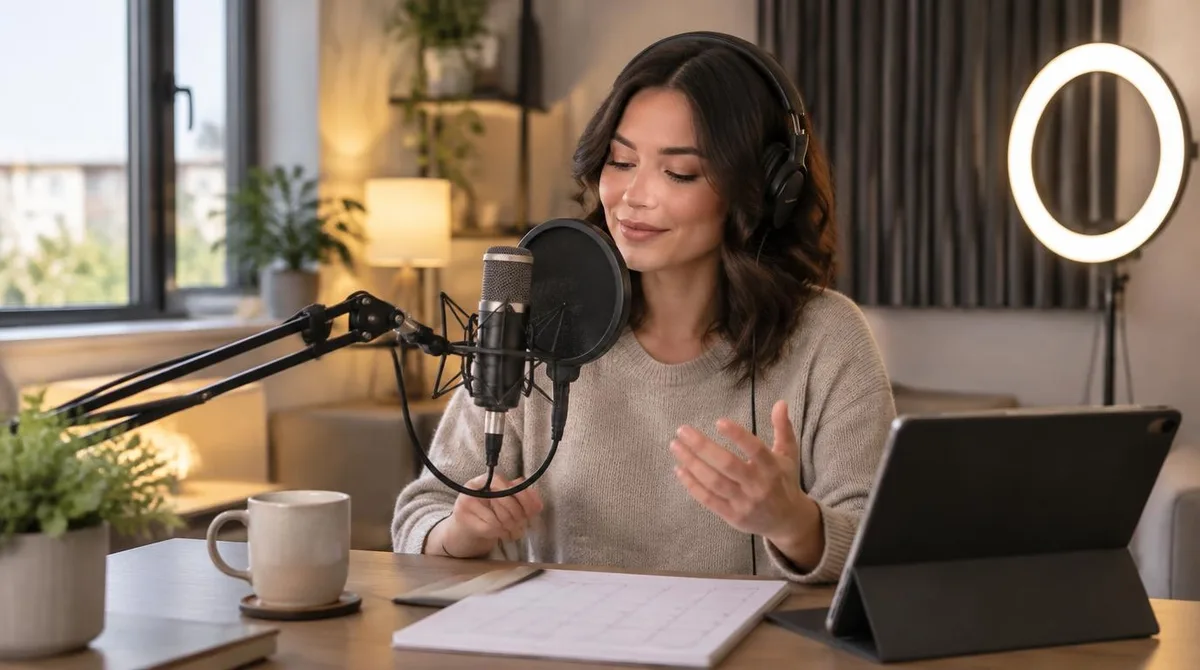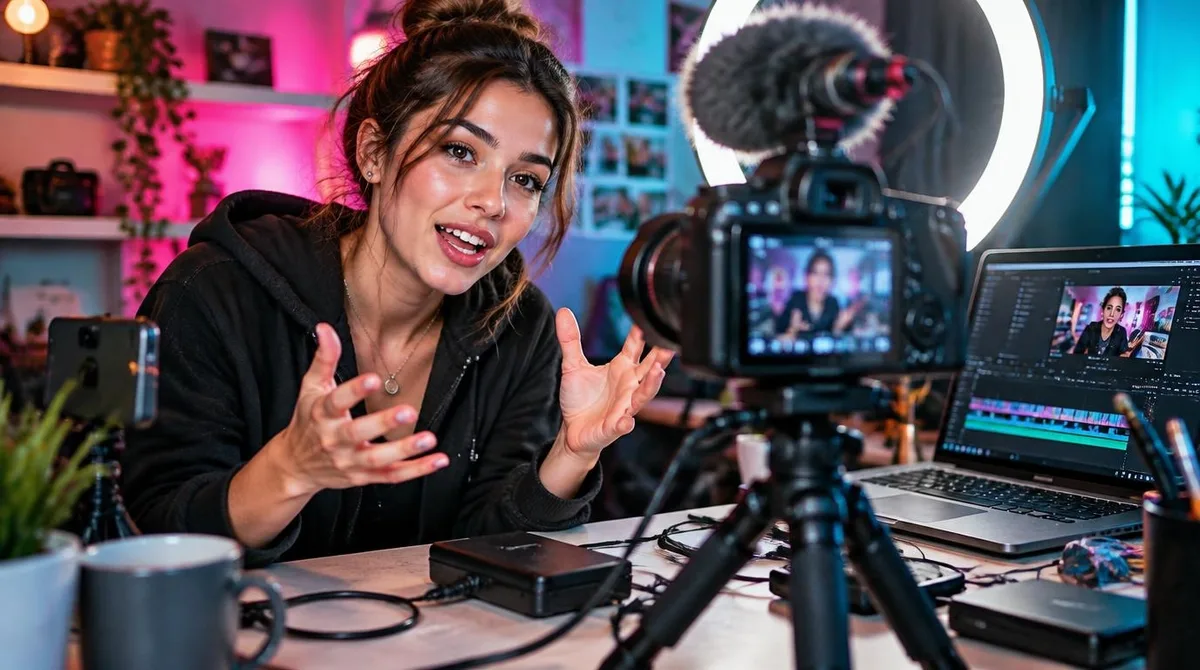
According to IndexBox, the global wireless ring light market is forecast to grow at a compound annual rate of 5.8% from 2026 to 2035, with a market index reaching 176 by 2035 against a 2025 baseline of 100. The report attributes the growth to the creator economy and hybrid work. That is the headline. The more useful read is what the forecast rests on — and what it does not tell you.
First, the qualification: this is a single research firm's projection, expressed here as an index rather than a dollar figure. The retrieved report gives a growth rate and a relative index, but no absolute market size in dollars. That matters. "5.8% a year" reads differently against a $500 million category than against a $5 billion one, and readers cannot tell which from what is published here. Treat the shape of the argument as more reliable than the precision of the number.
The report's demand structure is where creators should pay attention. Content creation and vlogging is estimated at a 35% share of end-use demand — the largest single sector, ahead of whatever the report lumps into the hybrid-work and general-consumer remainder. In other words, per IndexBox's own framing, roughly a third of this category exists because people film themselves. That is a real signal about where the money sits, even if the share is itself an estimate from a single source.
Is the creator economy actually driving this market?
Partly, and less directly than the title suggests. The report lists the proliferation of content creation and social platforms as the primary demand driver, alongside the normalization of hybrid and remote work. But it also flags a bifurcation: a high-volume, commoditized segment competing on price, and a premium segment where app-controlled RGB lighting, foldable designs, and brand equity carry price premiums. Per the report, casual creators gravitate toward entry-level models while committed creators pay up for color accuracy and durability. For related coverage, see How creators should price brand deals: a working framework.
So the honest version is: the creator economy drives volume at the bottom and margin at the top, and the middle is being squeezed. Private-label products are gaining share in mass-market online channels, applying downward pressure on prices for basic models. If you sell to creators — or sell as one — that squeeze is the part worth watching, not the 5.8% average.
There is also a circularity the report does not name. Ring lights are sold largely through e-commerce, which per the report controls over two-thirds of global volume and shapes marketing around influencer seeding and review velocity. Creators are simultaneously the demand and the distribution channel. When the same population powers both sides of a market, forecasts built on creator-economy growth inherit that growth's volatility — platform algorithm changes, which the report itself lists as a demand-side indicator, can move purchases in ways a ten-year CAGR does not capture.
What the supply-side risks mean in practice
The report is candid that manufacturing is concentrated in East Asian hubs. That enables fast product iteration but exposes the market to input cost volatility and logistics disruptions, and the report lists regulatory and intellectual property risks in key manufacturing hubs among its growth constraints. For a category this commoditized, those risks land on price, not on product availability — and price is already the pressure point.
For individual creators, the practical takeaway is modest. The gear itself is cheap and getting cheaper at the entry level; the premium features — app control, adjustable color temperature, multi-device mounting — are conveniences, not revenue drivers. Nobody's sponsorship rate moves because of a ring light. What the forecast genuinely reflects is professionalization: more people treating content as a business, which shows up elsewhere too, such as in how creators price sponsorship deals by audience tier. This connects to our earlier piece, Sponsorship rates creators — Sponsorship rates by audience size: what creators should charge at each tier. This connects to our earlier piece, Sponsorship rates creators — Sponsorship rates by audience size: what creators should charge at each tier.
What generalizes here — and what doesn't
What generalizes: accessory categories tied to content creation tend to bifurcate the same way. A commodity floor competing on price, a premium tier selling ecosystem and design, and private label eating the middle. That pattern is not unique to lighting, and the report's own logic — e-commerce dominance, review velocity as marketing, East Asian supply concentration — would describe many smartphone-adjacent accessories.
What doesn't: the specific 5.8% figure and the 2035 index. These are one firm's baseline scenario, and the report itself describes alternatives as scenarios. The outlets that tried and failed in adjacent categories don't publish retrospectives, so the visible record skews toward the survivors. And the demand-side indicators the report names — active creator counts, average revenue per creator, algorithm changes — are exactly the numbers that shift fastest.
The measured read: the direction is plausible, the mechanism is real, and the precision is not. If you make buying or selling decisions in this category, weight the structure — bifurcation, channel dominance, supply concentration — over the growth rate. The index number is the least durable fact in the report.