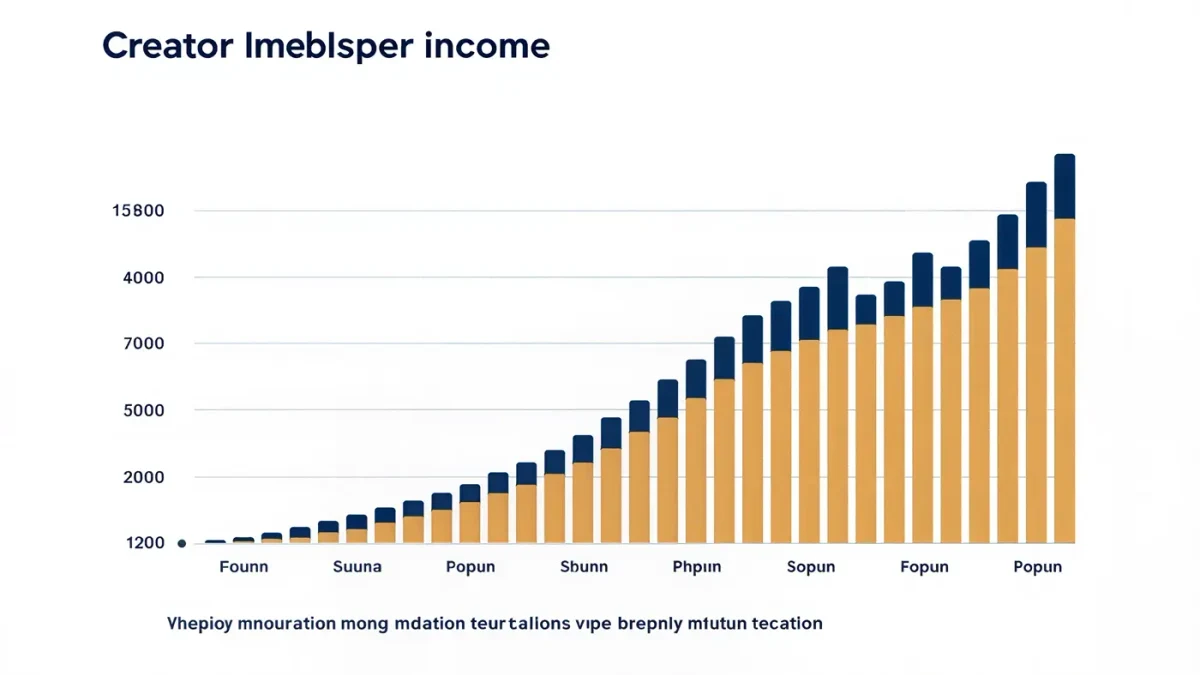
The creator economy has a real middle class, and it is bigger than the fame charts suggest. Goldman Sachs Research counted about 50 million creators worldwide and sized the market at $250 billion in 2023, with a case for $480 billion by 2027. The steady earners among them run on subscriptions and repeat deals, not viral hits.
This piece looks at where that middle tier comes from and what the published numbers actually show. The pattern is consistent: recurring revenue, a narrow audience, and several income lines. Definitions and counts here come from platform statements and research houses, not audited filings, so treat each figure as an estimate. Our creators hub follows the same beat.
What counts as a creator is loose. YouTube coined the term in 2011 as a swap for "YouTube star", and it now stretches from podcasters to online teachers, per the encyclopedia's entry on the creator economy. The same entry carries the cold baseline: most creators earn little or nothing from their work.
How big is the middle class, really?
Nobody publishes a census. Goldman Sachs Research expects the 50 million global creators to grow at a 10-20% compound annual rate over the next five years, with the market roughly doubling toward $480 billion by 2027. Those are forecasts built on platform disclosures and ad-market models, not a count of who clears a living wage.
The honest answer on size is this: the middle class is the part of the income curve that the feed never shows. Ladder tops get covered because they are legible. The bulk of earning creators sit far below, with audiences in the thousands and income in installments. Feeds reward the tail. Payrolls rarely do.
What do platform payout numbers actually show?
They show aggregate scale, not median income. YouTube's CEO letter from February 2024 reported more than 3 million channels in the Partner Program and said the program paid over $70 billion to creators, artists, and media companies across 2021 through 2023. That is the middle class in bulk: money earned largely below the fame line.
Read the case the way an analyst would. YouTube tried an ad-revenue-share program at scale, and the published numbers show it moves serious money. What generalizes: a broad base of monetized channels can exist under one roof. What does not: the platform disclosed totals and channel counts, not the distribution, and the figures are its own statements rather than audited filings. A big aggregate can still sit under a steep top.
What did recurring revenue change for mid-tier creators?
It gave them a floor. Patreon built its product on paid fan memberships, and its newsroom post marking ten years says creators have earned billions through paid membership over that run. For a creator with 20,000 loyal followers, a few hundred paying regulars can beat any ad check. Recurring income also behaves differently: churn — the share of subscribers who cancel in a period — decides whether the floor holds or leaks.
What generalizes: memberships smooth the spikes that ad payouts bring, and direct fan payment works without huge reach. What does not: Patreon's model leans on categories with close fan ties, and one platform's decade of totals says little about any single creator's ledger. The Patreon recurring revenue case tells the same story at platform level.
How does a creator reach the middle class?
Through a portfolio, not a lottery ticket. The income mix Goldman describes — brand deals, a share of platform ad money, and direct payments — rewards stacking several small lines over chasing one big break.
- Pick a niche narrow enough that 5,000 right followers beat 500,000 random ones.
- Add one recurring line: a membership, subscription, or serial product people pay for monthly.
- Keep one channel you own, such as an email list, outside platform algorithms.
- Track churn and repeat rates, because steady beats spectacular in this tier.
Name the bias too. Playbooks like this survive on winners, since the people who ran the same steps and stalled do not publish retrospectives. The stack raises odds. It does not promise outcomes.
Conclusion: the middle class runs on boring math
The creator economy's middle tier is neither a myth nor a gold rush. Published numbers put the market in the hundreds of billions and the payout base in the millions of channels, while the honest counts keep the fame economy in perspective. Steady income comes from recurring lines, owned audiences, and churn you can name. That is a business, not a lottery. This connects to our earlier piece, Entertainment lawyers now treat the creator economy as the business model, not the sideshow.