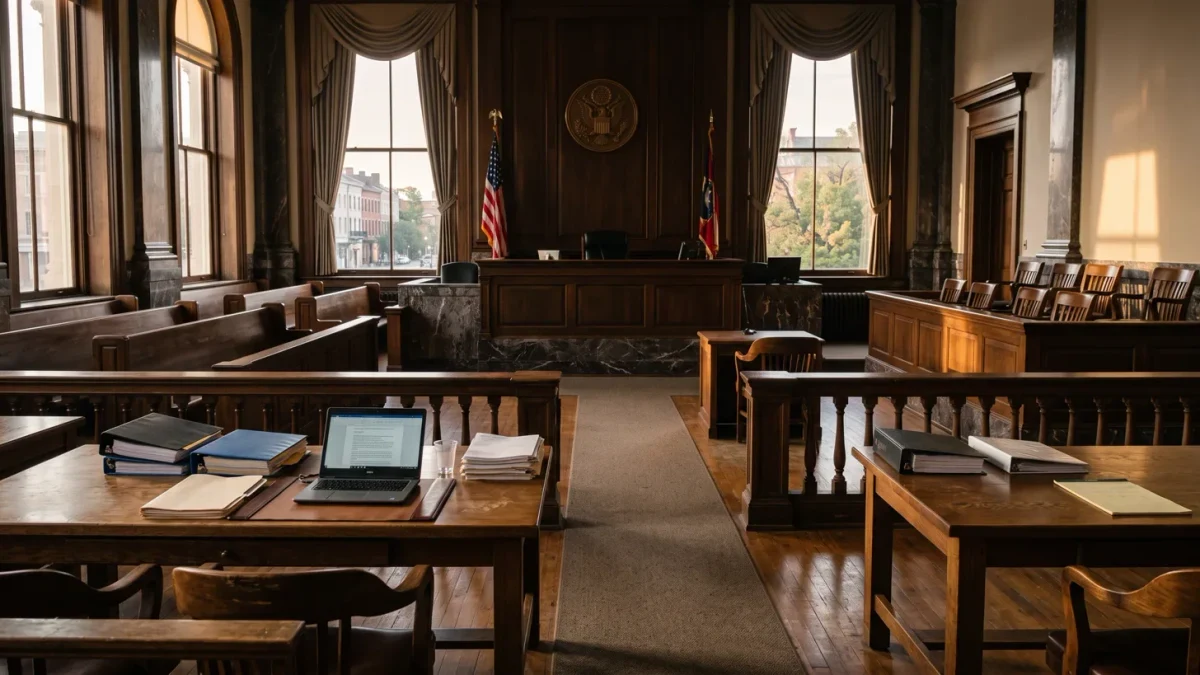
The New York Times sued OpenAI and Microsoft for copyright infringement on December 27, 2023, and in doing so converted a policy debate into a legal campaign. In the two years since, the litigation map filled in: Dow Jones and the New York Post sued Perplexity AI in October 2024 in Manhattan federal court over the AI-search startup's use of their journalism; the Times sent Perplexity its own cease-and-desist the following month; Wired and Forbes documented and publicly protested Perplexity's content reproduction in late 2024; and in February 2025, a different but pivotal case — Thomson Reuters v. Ross Intelligence — produced the first major US fair-use ruling against an AI company, finding Ross's copying of legal headnotes for AI training was not fair use. What follows is a status check: what the suits have established, what remains unresolved, and what publishers should take from the scoreboard as it stands.
Licht Journal publishes information and analysis, not legal advice; case descriptions come from court filings and named reporting.
What are the suits actually about?
Two distinct grievances travel under one banner. The training question: whether AI developers may ingest publishers' archives to train models without license or payment. The output question: whether AI products — especially AI search like Perplexity's — may reproduce publishers' material, with or without attribution, in answers that substitute for visiting the source. The Perplexity suit and the late-2024 cease-and-desist letters focus on the second, and it is the sharper commercial threat: training is invisible, while AI answers are the substitute product. Perplexity's responses through 2024-2025 emphasized its citations and launched a revenue-sharing advertising program with publishing partners — a partial answer that critics noted covered only partners, not the outlets being summarized without deals.
What has been settled so far?
Less than the volume of litigation suggests. The Thomson Reuters ruling in February 2025 gave publishers their clearest win — a federal judge holding that copying editorial content to train a competing AI product was not fair use on those facts — but it concerned a non-generative AI system, and its transferability to large language models is contested and under appeal-track scrutiny. The NYT's landmark case against OpenAI remained in discovery through 2025, with interim rulings narrowing some claims and the core issues unresolved. The Perplexity case proceeded slowly, and meanwhile the market moved faster than the dockets: licensing deals multiplied through 2025, and Cloudflare's July 2025 default blocking of AI crawlers gave even non-litigant publishers leverage no court had yet provided. The honest summary: law is being made at the edges, while business terms are being set in deal negotiations the lawsuits merely price.
What should publishers do while the courts work?
The operating playbook that has emerged from the litigants' own moves: block what you don't license — robots.txt and network-level crawler controls are cheap, enforceable by you, and the 2025 licensing surge demonstrated they change negotiating dynamics; document everything — the Perplexity complaints succeeded in describing specific reproduced passages, which requires evidence programs, not vibes; and negotiate from archive depth — every disclosed deal has gone to publishers with distinctive, citable archives. The lesson of the Wired and Forbes protest episodes is reputational as much as legal: public documentation of unauthorized reproduction moved Perplexity faster than any filing did.
What generalizes?
That copyright litigation is functioning as a pricing mechanism: no publisher expects to shut down AI search; they expect the suits to raise the price of uncompensated use until licensing is cheaper than fighting. That mechanism is working slowly and only for publishers with money, archives and leverage — the double bind critics named in 2025. What does not generalize: any single court outcome as a rule of the road. The doctrine will take years to settle, deals will keep being struck in the interim, and a publisher's practical protection in 2026 remains unglamorous — technical blocking, documented evidence, and a negotiable archive — rather than a courtroom.