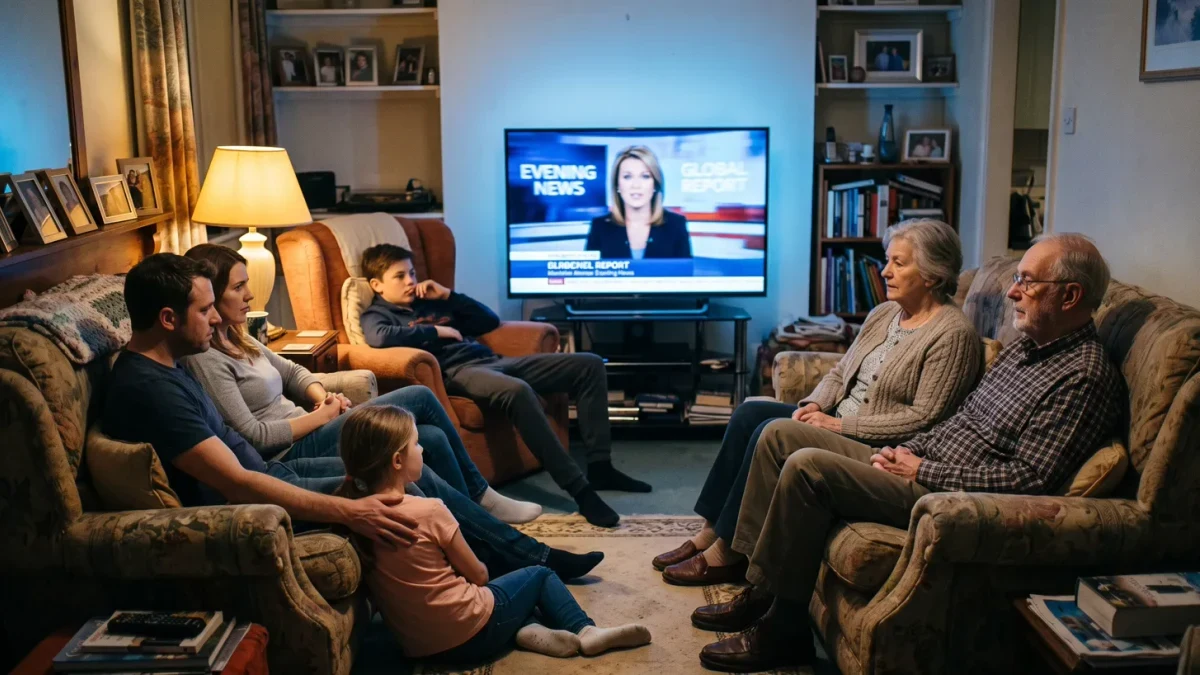
On October 1, 2024, CNN launched its first broad consumer digital subscription — CNN All Access, priced at $3.99 a month, bundling live TV streams, CNN's articles and a slate of original series, with the company describing a target of 10 million subscribers within a few years in remarks to press at launch. That a cable-news brand spent decades pouring journalism onto the free web and then asked readers to pay is a genuine strategic event in media business: it marks the end of the assumption that breaking-news brands cannot convert readers. The bet is now roughly eighteen months old, and its structure — pricing, bundle contents, and what CNN has and has not disclosed — tells other publishers more than any early scoreboard would.
Licht Journal publishes information and analysis, not business advice; details are from company announcements and named reporting.
What did CNN actually launch?
A bundle, not a news paywall. All Access, per CNN's launch materials and coverage in the trade and business press, combines the network's live programming, articles, and originals — a product deliberately built so that the subscription is not asking readers to pay for breaking news, which remains substantially free on CNN.com. The $3.99 launch price sits far below newspaper benchmarks (the Times' digital-only ARPU exceeded $9 a month by 2024 per its filings) and close to the streaming-app norm — pricing that reads as audience-acquisition strategy rather than revenue strategy: get the payment relationship first, raise price later.
Why does a TV brand need subscriptions at all?
Because cable economics are shrinking and digital advertising alone does not replace them. Linear TV audiences have declined for years, cord-cutting erodes the carriage fees that funded networks like CNN, and ad-supported streaming pays less per viewer than cable ever did. Reader and viewer revenue is the third leg every TV-era news brand is scrambling to build — the same logic that pushed Fox News into Fox Nation, NBCUniversal into Peacock tiers, and MSNBC into preparing its own streaming product for its post-cable future, per reporting on those efforts. CNN's specific wrinkle: enormous digital reach — hundreds of millions of monthly visitors at various points per measurement firms — built during the free era, now being converted at the margin into payment relationships.
What has and hasn't been disclosed?
The honest status: CNN has not published audited subscription figures, and the milestones company executives have shared in interviews are self-reported and unaudited — treat them accordingly. What is observable structurally: the price has held, the bundle has been marketed heavily across CNN's own air — a distribution advantage no newspaper has — and the product's center of gravity is video, not articles. The pattern matches the industry's accumulated lesson that live and streaming content converts TV audiences more readily than text paywalls convert news readers: the product being sold is access to the broadcast brand, with journalism attached.
What should other publishers take from it?
Three transferable observations. First, breaking-news brands stopped treating subscription as impossible — the objection was strategic, not physical, and CNN's launch removed it. Second, bundle-first works: All Access never tried to sell articles alone, which matches the retention logic the Times proved at scale — sell a relationship with several values, not a single product. Third, price-to-enter, not price-to-earn: a low entry price with an owned billing relationship is a customer-acquisition instrument; newspapers that launched at premium prices had the harder, purer path. What does not generalize: CNN's owned-air marketing, its live-programming rights and its brand scale — a regional publisher copying the $3.99 price without the bundle and the airtime is copying the sticker, not the strategy. The move's clearest signal is for every publisher still waiting for a sign that audiences pay for news: the last big free holdout stopped waiting.
For more context, read Why media consolidation accelerated in 2025 — and what the deal logic actually was.
For more context, read creator fund payouts cut.
For more context, read podcast ad revenue iab report.