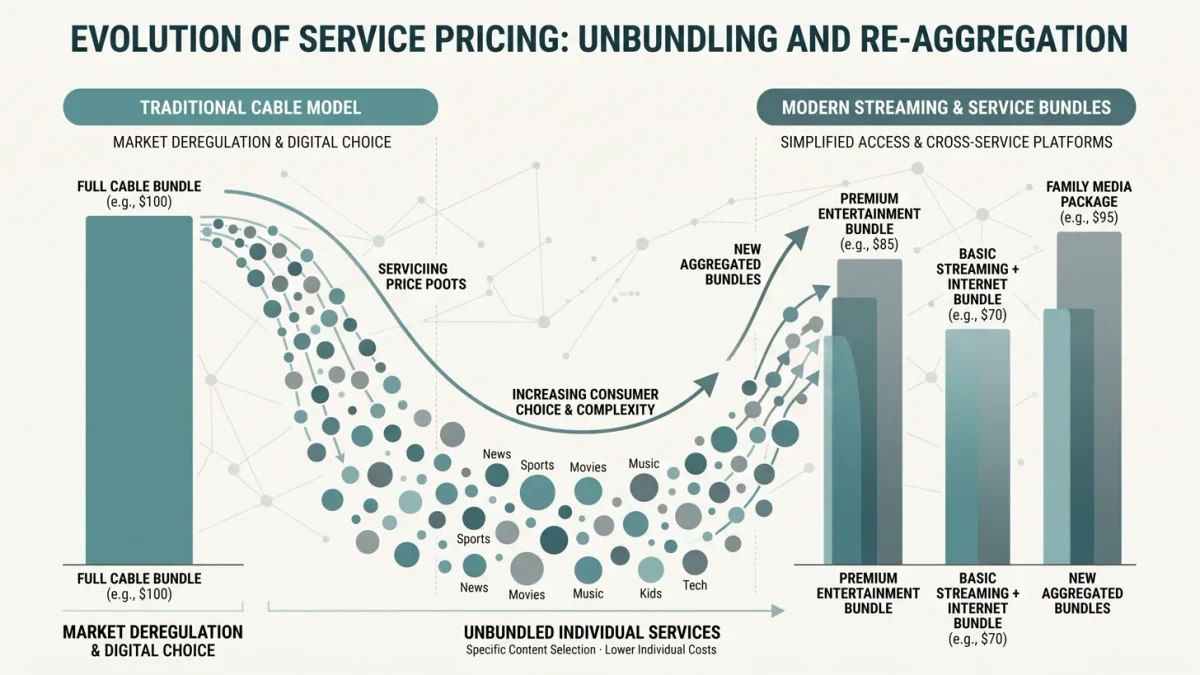
The streaming era's arc is now complete enough to read as a controlled experiment. Television was unbundled — Netflix, then HBO, Disney, Apple, Paramount, Peacock, each sold separately — and then, as subscriber growth saturated in 2022-2024 and every major service raised prices repeatedly, it rebundled: Disney+ with Hulu and ESPN, Warner Bros. Discovery's Max, the wave of 2023-2025 bundle partnerships across former rivals, all priced to slow the churn that à-la-carte subscription economics made brutally visible. By the mid-2020s, analysts tracking the market — and the streamers' own earnings calls — were describing a familiar equilibrium: assembling a competitive slate of streaming services costs a household a meaningful share of what cable did at its peak. The unbundling promised cheaper, choosable television; the rebundling delivered television's economics back, with better on-demand features. Media businesses far from television should read the arc anyway, because it is the cleanest data set on bundle pricing that exists.
What did the price increases look like?
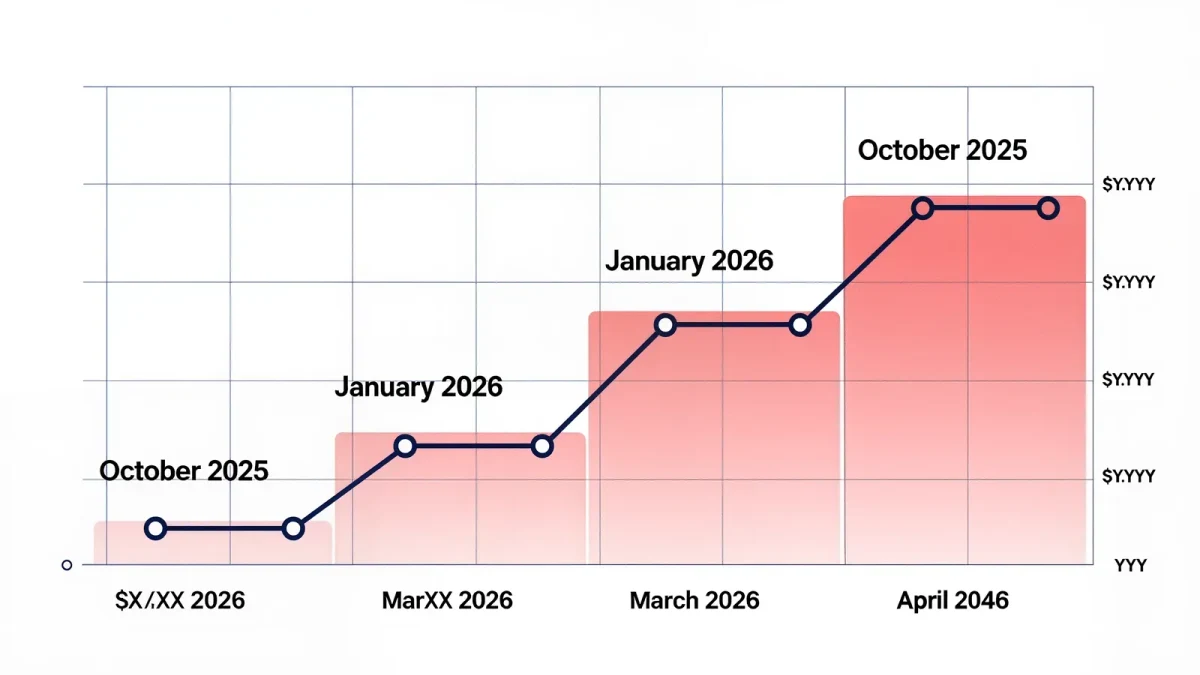
Relentless and convergent. Netflix's standard plan roughly doubled over the 2017-2024 period, per its published pricing; Disney+ raised its ad-free price repeatedly after launching in 2019 at a deliberate loss-leader $6.99; HBO's service climbed steadily; nearly every service executed multiple increases between 2022 and 2025, alongside the sector's password-sharing crackdowns and ad-tier introductions — Netflix's paid-sharing rollout in 2023, credited in the company's own reporting with adding millions of subscribers, showed the same appetite for revenue-per-household over growth-at-any-price. The strategic driver was stated plainly in earnings calls across the industry: subscriber growth hit saturation, capital markets stopped rewarding unprofitable growth, and every service turned to ARPU — revenue per user — as the metric that could still move. That turn is the whole story: unbundling won customers, and rebundling plus pricing won back the economics.
Why did the rebundle happen?
Churn arithmetic. À-la-carte streaming made cancellation frictionless — pause after a season, return for the next — and churn rates across the industry ran at levels subscription businesses find intolerable (industry trackers repeatedly measured monthly churn in the mid-single digits across services). Bundles fix churn the same way everywhere: multi-product households cancel less, the discount makes leaving feel like losing accumulated value, and annual commitments smooth the cycle. The streamers arrived at the same construction newspapers and streamers-of-text discovered independently: sell the aggregate relationship, not the single product. The parallel mechanics — the Times' bundle retention disclosures and streaming's bundle push — are the same equation solved in two industries.
What should publishers take from it?
Four transferable findings. First, à-la-carte maximizes churn; aggregation suppresses it — universal across both industries' disclosures. Second, price increases are survivable and even healthy once the alternative (chasing growth at flat pricing) ends; the streamers raised prices repeatedly while growing, because the product's value had accumulated. Third, ad tiers and subscription tiers coexist: the 2022-2024 introduction of advertising across formerly ad-free services was the industry admitting that one revenue model couldn't carry content costs — the same conclusion publishing reached from the other direction. Fourth, the password-sharing episode showed that a tolerated leak becomes a priced feature without destroying love for the product — a lesson for any publisher hesitating to enforce its own terms. What does not transfer: television's content-cost structure and its consolidation endgame, where the number of viable services keeps shrinking through mergers — a publisher's bundle does not need to buy a rival to reprice, and pretending otherwise confuses spectacle with strategy.