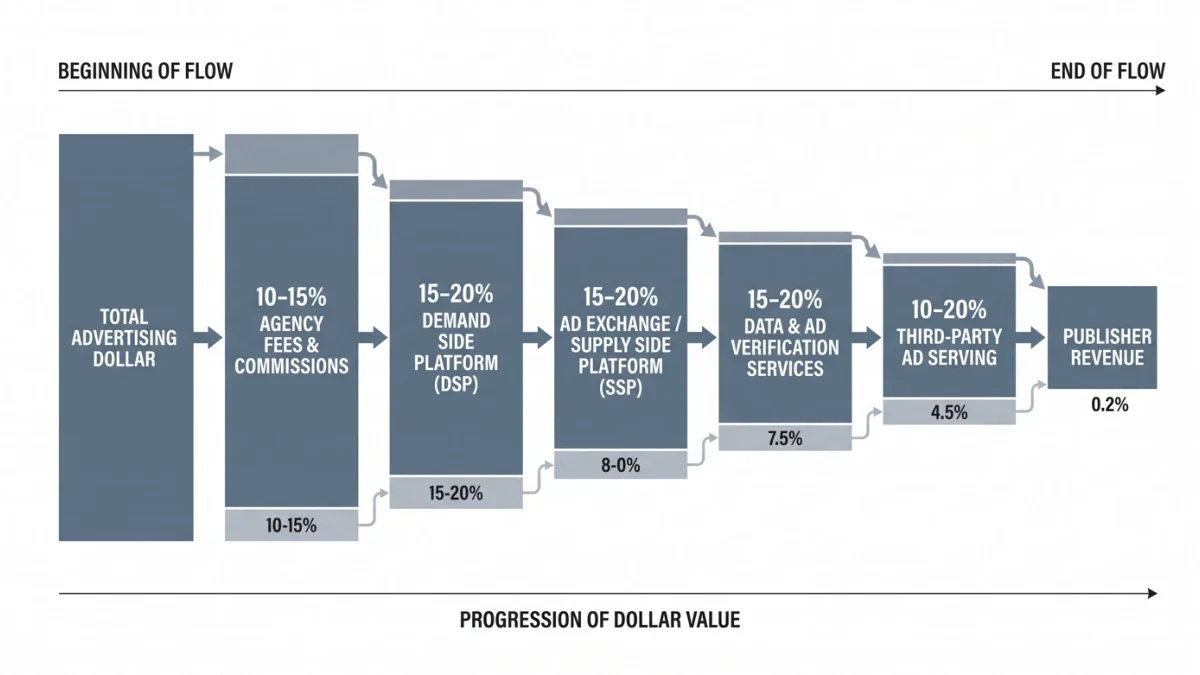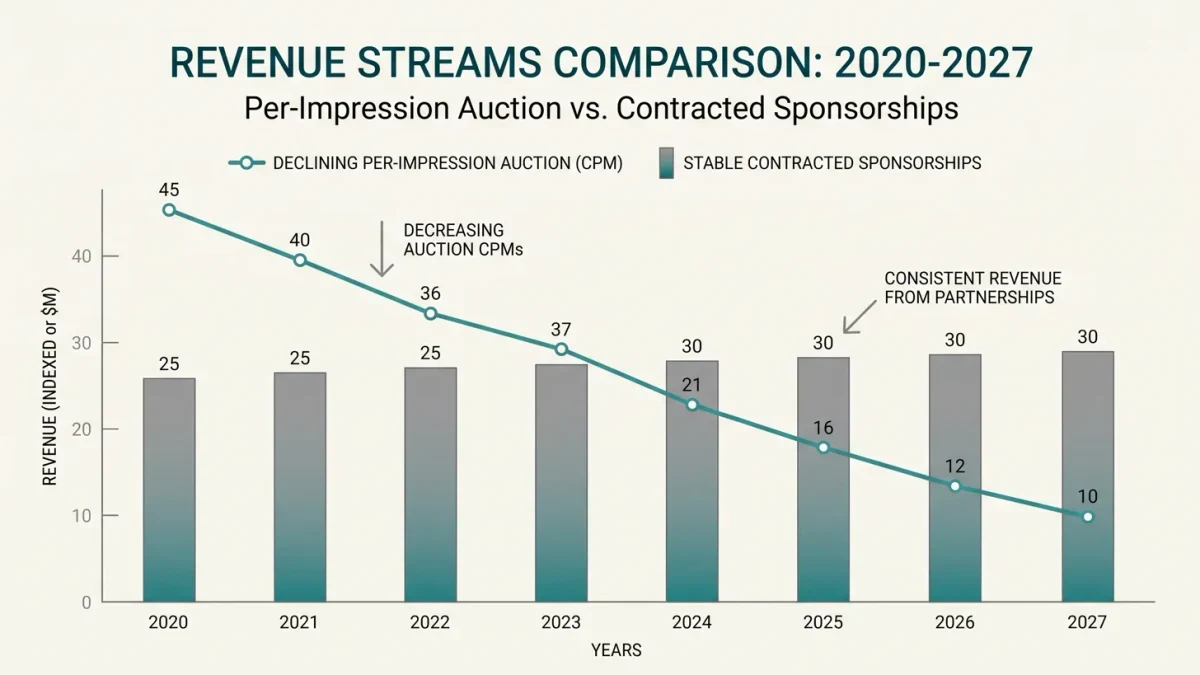
A niche publisher selling programmatic display advertising is paid by the impression in a market where open-web CPMs have stagnated for years — single-digit dollars per thousand impressions is the standard band in industry benchmarks, and falling. The same publisher selling a sponsorship — "this newsletter is brought to you by," a named section, an event presence — is paid for association with a trusted vertical, and the price is set by what that association is worth to a specific advertiser, not by an auction. Industry body research and publishers' own reported results consistently show direct-sold and sponsorship revenue holding up while programmatic yields erode. For a small publisher, understanding this split is worth more than any optimization campaign.
Licht Journal publishes information, not advertising or business advice; rate ranges are from published industry benchmarks.
What are you actually selling in each?
Programmatic display sells audience delivery: reach, impressions, targeting criteria — a commodity the platforms deliver at unmatched scale, which is why its price behaves like a commodity. Sponsorship sells context and association: the advertiser buys adjacency to a publication the target customer respects, with the implied endorsement of appearing there. The value mechanisms differ completely: impressions are worth what an auction says; association is worth what the brand believes the halo is worth. That is why a sponsorship can price at ten times the equivalent impression value in a valuable niche — and why it must never be sold by the impression.
What do the economics look like side by side?
| Dimension | Programmatic display | Sponsorship |
|---|---|---|
| Pricing basis | Per impression (auction) | Flat, per placement/period |
| Typical niche yield | Low single-digit $ CPM, eroding | Premium multiples; set by niche value |
| Sales effort | Near zero (plug in) | Real: relationships, proposals |
| Forecast stability | Volatile with market | Contracted, multi-issue |
| Trust demands | None | Total — the product is trust |
The trade in one line: programmatic is found money with zero sales cost; sponsorship is a business with a sales function. Most viable niche publishers run programmatic as the passive floor and concentrate effort on sponsorships — commonly aiming for sponsorships to supply the majority of ad revenue from a minority of inventory.
What does selling sponsorships require?
Three assets and one discipline. The assets: a defined audience the sponsor wants (a real media kit with audience data, not inflated composites); placements that carry association rather than interruption — newsletter presenting slots, section sponsorships, podcast reads, event presence; and proof of performance from previous sponsors, since renewal is the entire margin. The discipline: church-state separation that is visible — sponsors buy adjacency, never coverage, and one blurred placement poisons the premium that every other sale depends on. Publishers who crossed that line appear regularly in industry post-mortems; none of the stories end with the ad revenue covering the credibility loss.
How should a small publisher sequence this?
Run programmatic from day one as passive income on unsold inventory, capped at levels that do not degrade the reading experience (heavy ad loads measurably depress engagement and, with search, rankings). Build the sponsorship product once the audience is definable — a niche with a clear buyer — and sell it like a subscription: multi-issue packages, renewals before expiry, a rate card that rises with evidence. The crossover point in publishers' reported experience usually arrives earlier than expected: a handful of committed sponsors can out-earn millions of programmatic impressions, because ten relationships at premium prices beat a million anonymous auctions at commodity prices. What generalizes: sell association where trust exists, impressions where it doesn't. What does not: the rate card of any specific publication — the premium is your niche's scarcity, and no two niches price alike.